ABOUT US
We welcome new and old customers from all walks of life to contact us for future business relationships and mutual success!
GET A FREE QUOTE
-
Home

-
Blog
-
Industry News
- Mechanical Tees vs. Reducing Tees: Retrofit Pipes Without Cutting
Mechanical Tees vs. Reducing Tees: Retrofit Pipes Without Cutting
-
 Eren
- 13,11 月
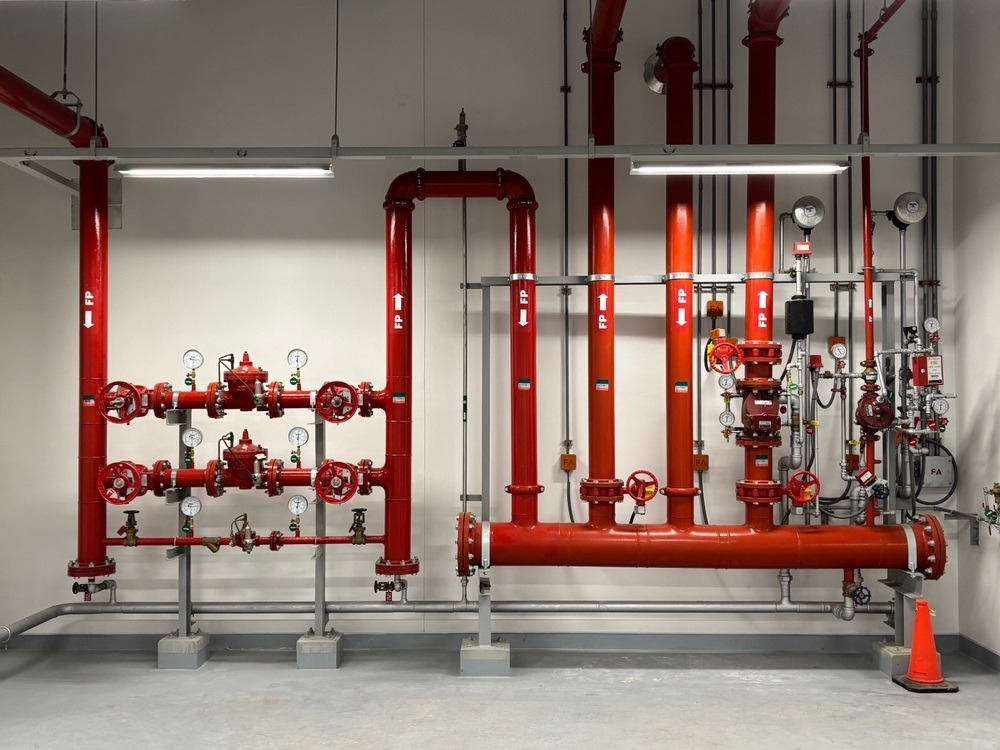
A retrofit of modern industrial and commercial piping systems presents several mechanical contracting problems:
- Costly System Downtime: A shutdown of the supply pipes interferes with active building work, thus complicating the process of branch connection installation.
- Complicated Hot Work and Cutting: Cutting pipe sections necessitates heavy equipment and welding permits.
- Labor-Intensive Assembly: Any changes to existing pipes necessitate multi-joint assembly and fabrication.
The resolution of these problems depends on the selection of the most appropriate fitting. The comparison of mechanical tee and reducing tee can help in this choice. Mechanical tees provide a simple solution for those contractors who are interested in installing a branch connection without cutting the main pipe.
JunTong is a leading provider of high-quality ductile iron grooved systems. With its 68,000 m² manufacturing facility certified to ISO 9001, UL, and FM, JunTong provides the best metallurgical engineering solutions combined with technical support, free product selection, and a 1-year warranty.
Understanding Branch Outlets: Mechanical Tee vs. Reducing Tee
Choosing the right type of branch connection will determine the efficiency of the installation, the labor cost, and the integrity of the pressure within the entire system. It is vital to know how a grooved mechanical tee differs from a grooved reducing tee.
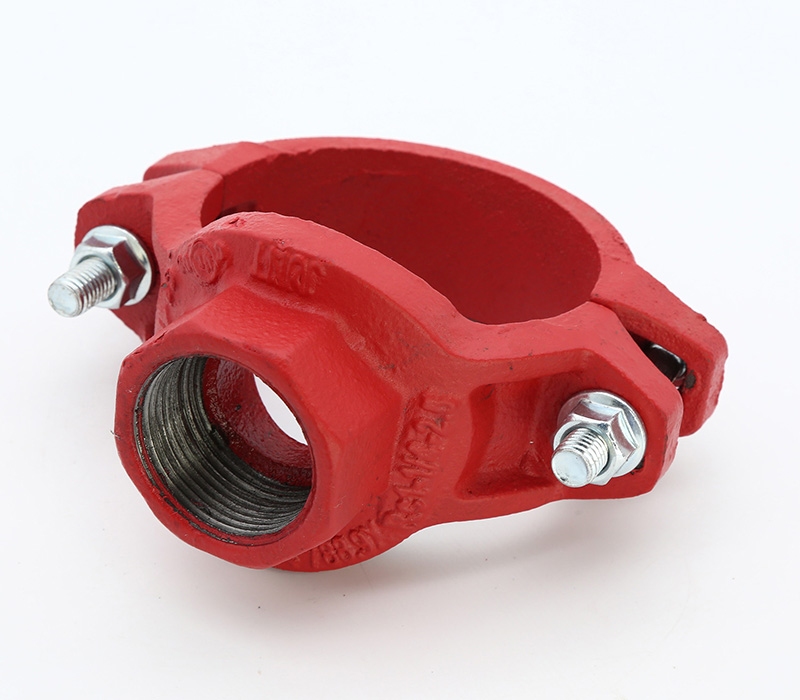
Structural Differences and Working Principles
By knowing the mechanical design of each one, it makes sense as to why mechanical tees are a good option in modifying any existing pipelines.
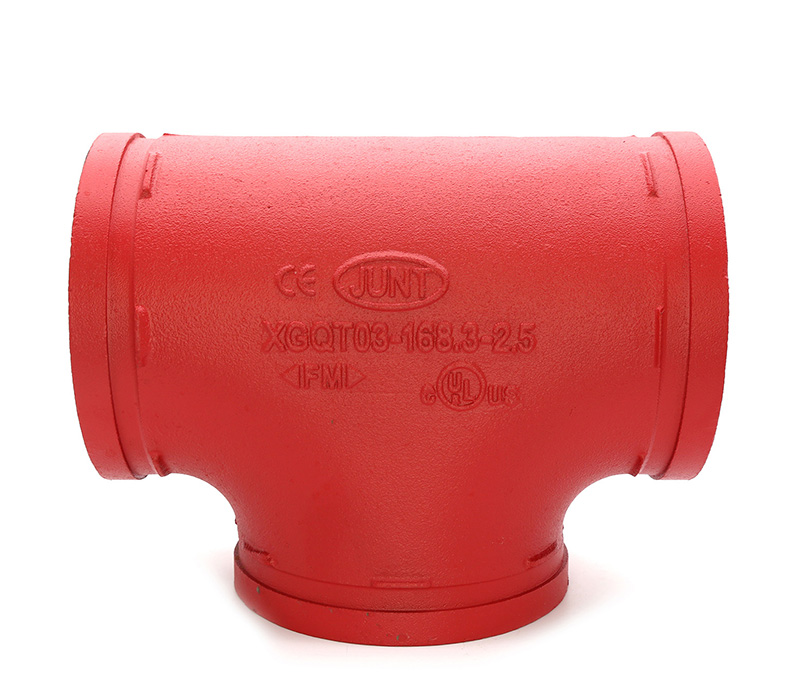
- Grooved Reducing Tee Pipe Fitting: The basic reducing tee pipe fitting requires a total cutoff of the header line pipe into two pipe spools, machining roll grooves from each cut end, and the connection of a three-way cast tee fitting through external grooved couplings.
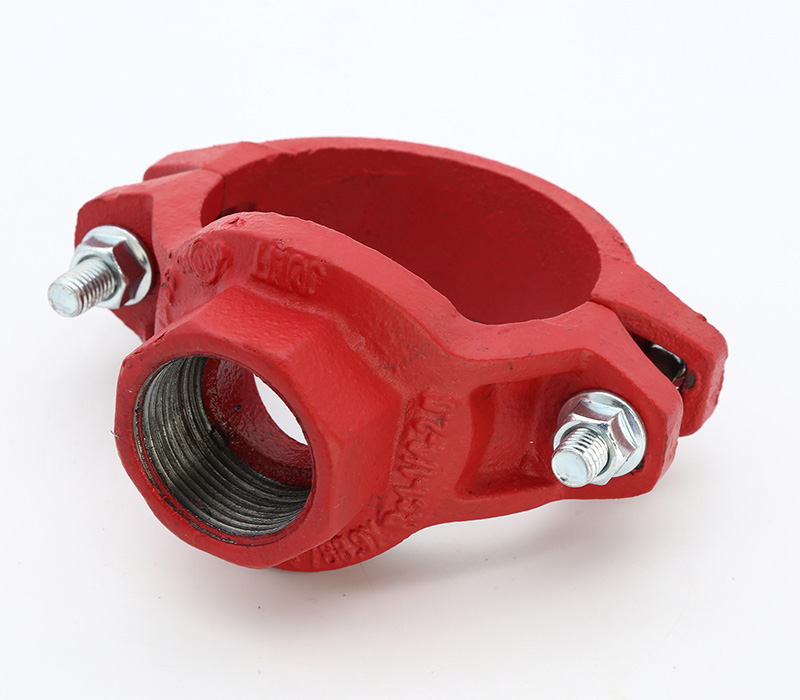
- Grooved Mechanical Tee: The grooved mechanical tee can be simply attached by encircling any existing unbroken pipeline with just a single outlet drilled.
- Variety of Outlets: JunTong supplies both kinds of mechanical tee fittings with either threaded outlets or grooved pipe branch outlet design.
Installation Speed and Labor Efficiency
It is critical to reduce labor hours at the site to ensure project margins and tight construction schedules. Efficient mechanical tee installation will help contractors reduce disruption when upgrading pipelines.
- Reducing Tee Assembly Time: Includes draining pipes, double-ended cutting, field grooving, aligning three joint ends, and tightening multiple coupling bolts.
- Efficient Mechanical Tee Installation: Only involves drilling a small hole corresponding to the mechanical tee hole size, placing the gasket collar, and tightening the clamp housing bolts.
- No Main Line Sectioning: No need for structural pipe cutting and heavy rigging equipment, resulting in labor savings of up to 70% in mechanical tee installation.
Retrofit Engineering: Solving Practical Branch Connection Challenges
Spatial limitations and uptime constraints are common challenges that mechanical contractors often encounter while upgrading buildings. The ductile iron mechanical tees from JunTong offer an ideal solution to these problems in challenging commercial environments where a branch needs to be connected without splitting the main pipe.
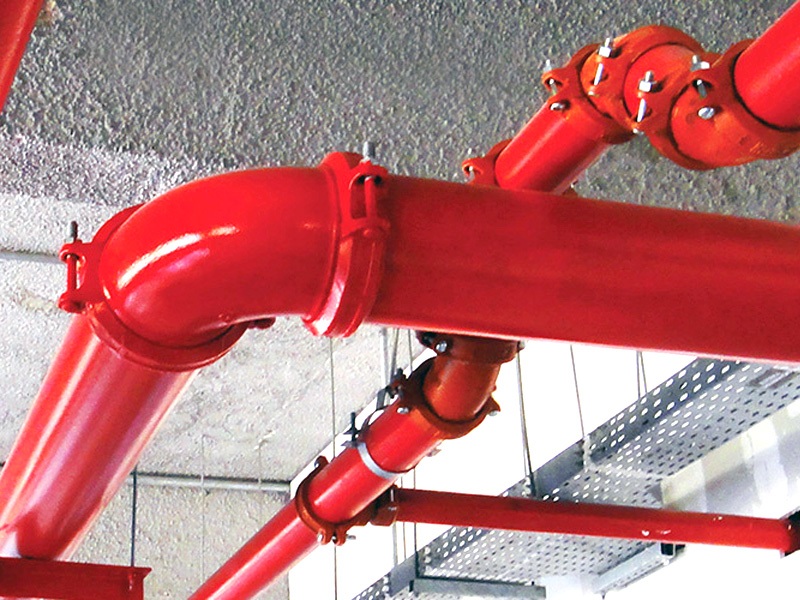
Commercial Fire Sprinkler System Branch Expansion
Installation of new sprinkler heads or branch line additions into a live fire sprinkler protection header demands assurance and minimal disruption. Using the appropriate mechanical tee for the fire sprinkler application becomes a simple task.
- Installation Problem: Adding branch lines to live fire sprinklers in an occupied high-rise building for any extended period without emptying the main pipes.
- Certified Performances by JunTong: JunTong mechanical grooved tees are made from ASTM A536 ductile iron and are UL/FM certified for a maximum working pressure of 300 PSI.
- Sealed Security: The precisely molded EPDM rubber ring forms a pressurized seal over the drilled hole.
HVAC Chilled Water Pipe Branch Connection Upgrades
The renovation of hydronic heating and cooling branch lines in crowded mechanical spaces creates extreme spatial constraints. This compact pipe branch connection solution for HVAC allows the installer to save the effort of reconstructing the piping system.
- Constrained Spatial Environment Problem: Installation of an HVAC pipe branch connection when overhead clearance restricts the insertion of a bulky cast reducing tee.
- Compact Footprint Solution: The JunTong grooved mechanical tee and the U-bolted mechanical tee clamp on the header in a compact plenum space.
- Anti-Corrosive Properties: Coated with electro-deposited anti-corrosive paint or galvanized through hot-dip, JunTong pipe fittings can resist corrosion in chilled water applications.
Technical Superiority: Why JunTong Mechanical Tees Ensure Long-Term Reliability
Durability is engineered into the system, and manufacturer services will safeguard the pipeline from any breakdowns and leaks. JunTong combines quality assurance with business-to-business services that will help with undertaking grooved pipe-fitting retrofits.
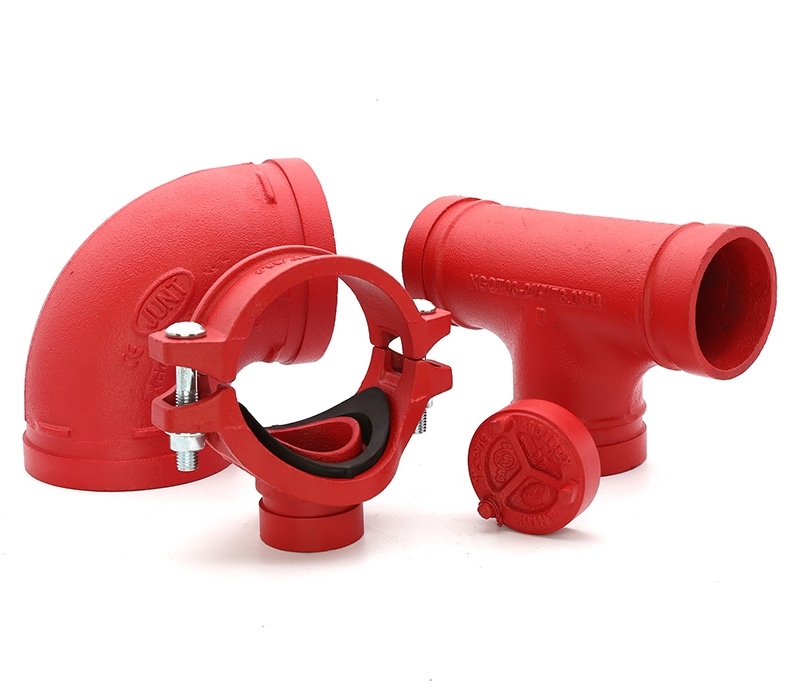
Metallurgical Integrity and Precision Sealing Innovation
State-of-the-art casting process and superior quality elastomers guarantee reliable operation even under dynamic conditions of temperature and pressure.
- Thick-Walled Ductile Iron Body: Each ductile iron mechanical tee is made using high-tensile-strength ductile iron ASTM A536, which ensures excellent strength and toughness.
- Flexible Rubber Gasket: Made using high-quality EPDM seals that seat firmly on the outer diameter of the pipe to prevent any leakage of fluids.
- Surface Protective Coatings: Available in corrosion-resistant red paint, epoxy powder coating, or galvanized surface.
JunTong Comprehensive B2B Technical and After-Sales Support
JunTong offers end-to-end support to streamline procurement and guarantee installation accuracy.
- Free Technical Selection Service: JunTong engineering experts provide 1-on-1 product selection guidance based on your pipe schedule and working pressure.
- 1-Year Product Warranty: All non-human-damaged JunTong fittings are backed by a 1-year free replacement guarantee.
- 24/7 Technical Consultation: Fast-response support for troubleshooting, torque specifications, and jobsite guidance.
Take the Next Step in Efficient Pipeline Retrofitting
Streamline your next grooved piping system retrofit with certified, high-strength branch fittings manufactured by JunTong.
Partner with JunTong for Certified Piping Solutions
Contact our B2B quotation team today to request product catalogs, technical datasheets, or factory-direct pricing.
- Request a Custom Quote: Send your project specifications to speng@groovedfitting.cn or call +86 132 8079 1791 for immediate B2B pricing.
- Order Free Test Samples: Take advantage of JunTong’s complimentary sample testing and selection services to verify fitting performance on your jobsite.
FAQ
Q: What is the basic difference between a mechanical and reducing tee when you consider their retrofit on the existing pipe?
A: Reducing tee installation involves completely cutting the main pipe into two pieces, then grooving both cut ends, while a mechanical tee can be installed simply by drilling one outlet and fastening the fitting to the line.
Q: How can installer technicians calculate mechanical tee hole size?
A: Mechanical tee hole size calculation should be done according to the diameter of the branch outlet and is determined in the fitting manufacturer’s specification sheet. The installers should use only a standard hole saw with the required diameter to guarantee correct seating of the rubber gasket.
Q: Can mechanical grooved tees be used in the high-pressure fire sprinkler systems?
A: Yes, high-quality ductile iron mechanical tees that are approved by UL and FM have a maximum working pressure of 300 PSI, so they are completely code compliant for branch connections in the fire sprinkler system.
Q: In what way does a threaded mechanical tee differ from a grooved mechanical tee outlet?
A: The former has female NPT/BSPT threads at the branch end, which allows for connection to threaded nipples, valves, or sprinkler drops, whereas the latter has a grooved branch end that allows it to be connected directly with grooved couplings.
Recent Post