ABOUT US
We welcome new and old customers from all walks of life to contact us for future business relationships and mutual success!
GET A FREE QUOTE
-
Home

-
Blog
-
Industry News
- Grooved vs Threaded vs Flanged Coupling: Best Fire Pipe Joint
Grooved vs Threaded vs Flanged Coupling: Best Fire Pipe Joint
-
 Eren
- 23,October
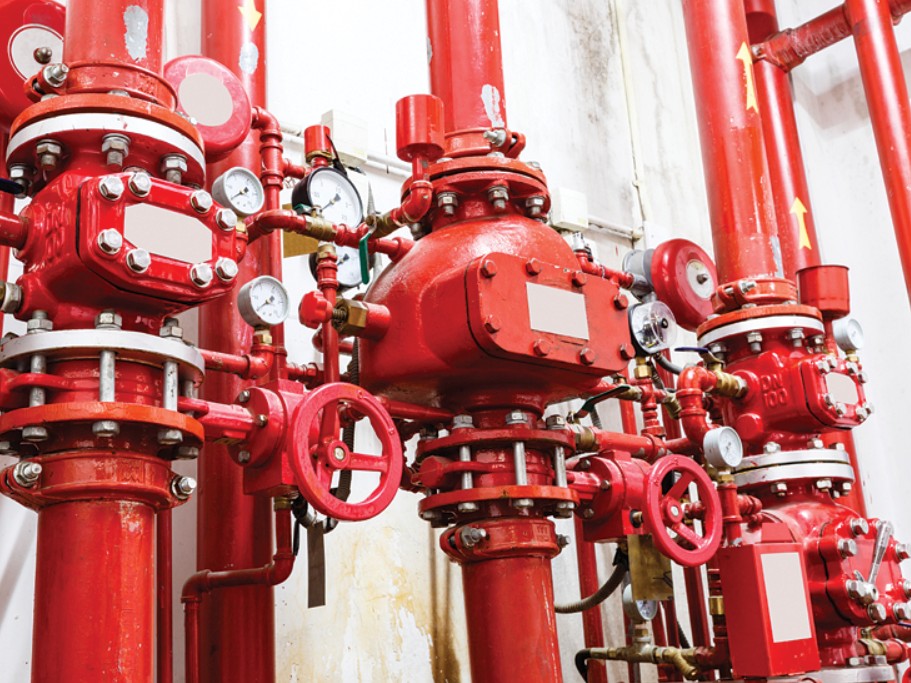
In fire protection engineering, the integrity of pipe joinery decides if a life-safety suppression system works right when fire strikes. Picking the right fire protection pipe connection types matters for balancing how long the system lasts, how fast it installs, what it costs to maintain, and how it holds up under high pressure from water and movement.
Key factors driving modern fire sprinkler pipe connections include:
- Mechanical Strength & Pressure Resistance: These joints handle severe pressure surges, ongoing system pressure, and shifts from heat or quakes.
- Installation Speed & Jobsite Safety: They cut labor hours and remove hot-work fire hazards on new construction or building retrofits.
- System Flexibility & Maintenance: They allow quick access for inspection, modification, or component replacement over decades of service.
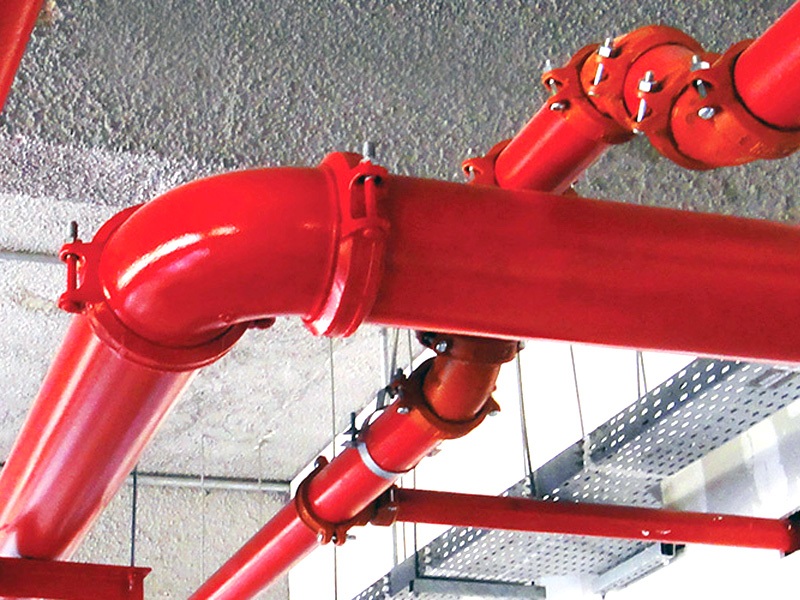
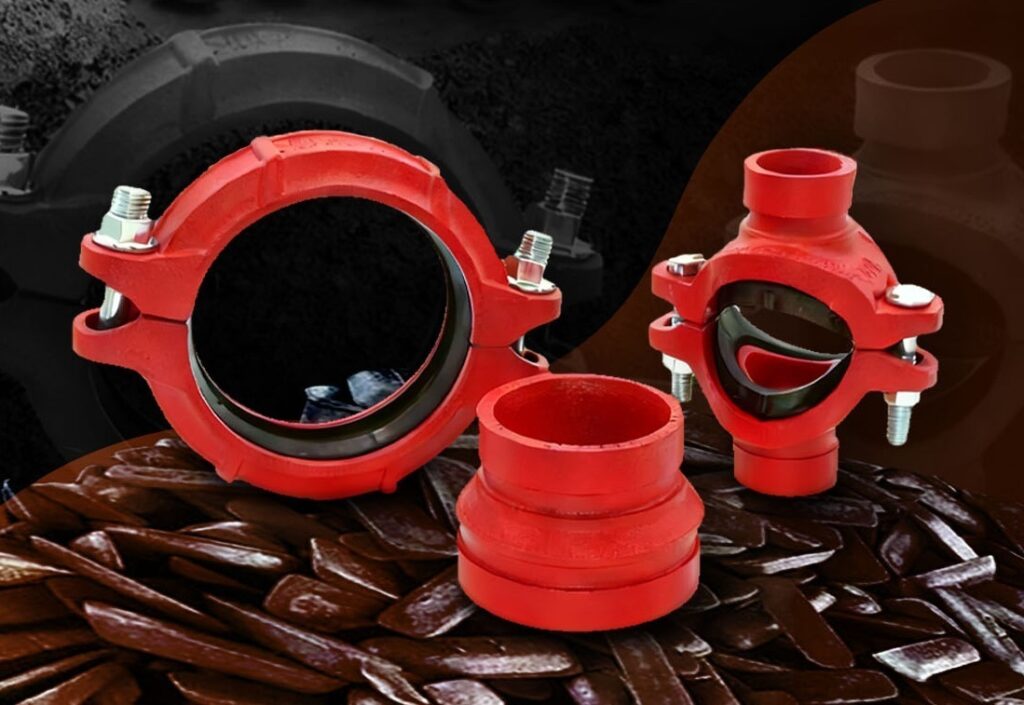
To meet these demanding engineering standards, JunTong stands out as an established grooved coupling manufacturer specializing in premium fire sprinkler grooved fittings. The company uses high-grade QT450-10 ductile iron castings along with advanced anti-corrosion baking paint surface treatments. Full UL/FM global certifications back the products. JunTong supplies complete mechanical pipe coupling fire protection solutions and offers expert technical selection services. This helps projects run smoothly around the world.
Core Requirements for Fire Protection Pipe Connection Types
Evaluating fire protection pipe connection types requires a comprehensive understanding of operational mechanics and regulatory mandates. Piping joinery in sprinkler networks must remain drop-tight under extreme emergency conditions.
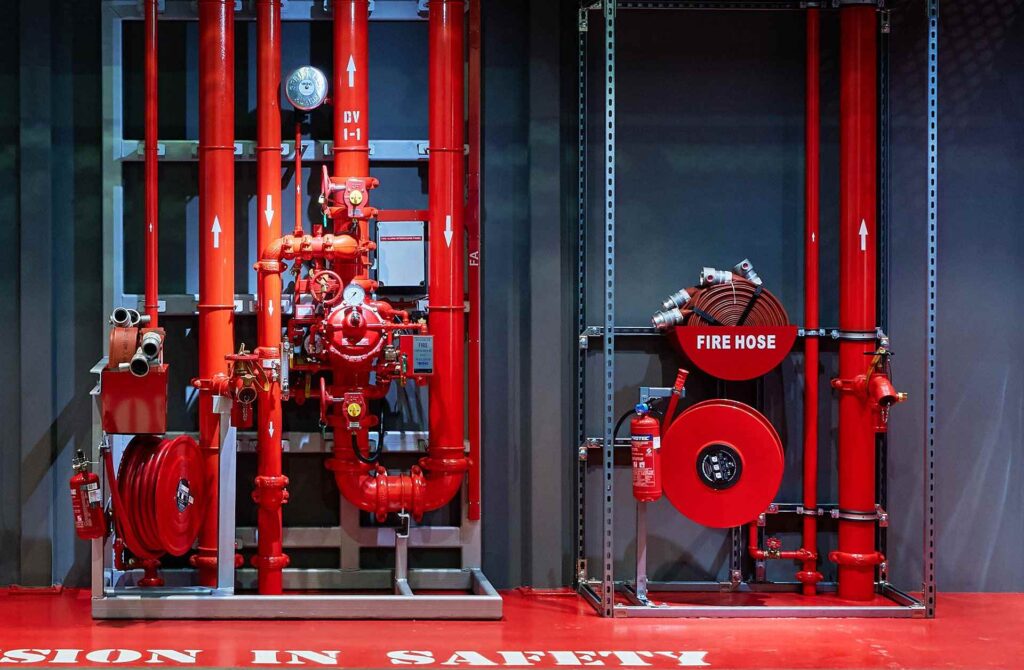
Operational Pressure and Mechanical Stress Resilience
Fire suppression networks experience dynamic hydraulic surges, thermal variations, and structural settling that test joint integrity.
- Pressure Resistance: Connections must maintain a high grooved coupling pressure rating ranging from 300 to 500 PSI to withstand sudden water hammer during pump activation.
- Deflection and Vibration Handling: Piping joints must accommodate angular deflection and thermal expansion without stressing pipe hangers or walls.
- Seismic Resilience: Joint assemblies in earthquake-prone zones must absorb differential building movement without shearing or leaking.
Compliance, Certifications, and Installation Safety
Safety standards mandate third-party verification and fire-safe assembly practices on all active construction sites.
- Strict Certification Standards: Fire sprinkler pipe connections must be FM Approved and UL Listed to ensure compliance with NFPA standards.
- Flame-Free Jobsite Safety: Mechanical assembly methods eliminate welding torches, removing hot-work permit costs and fire safety watch requirements.
- Labor Cost Reduction: Simplified joining processes drastically reduce installation hours compared to labor-intensive traditional jointing.
Technical Comparison: Grooved vs Threaded vs Flanged Connections
A detailed grooved, threaded, and flanged comparison demonstrates clear trade-offs in installation speed, structural performance, and long-term serviceability. Selecting the right fire sprinkler coupling types depends on pipe diameter, location, and mechanical requirements.
Grooved Couplings: High Efficiency and Dynamic Performance
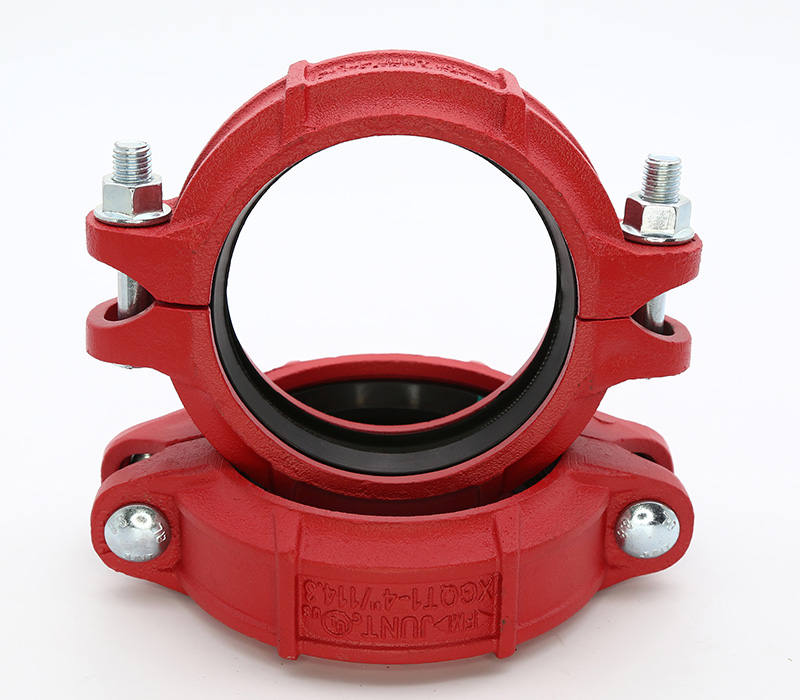
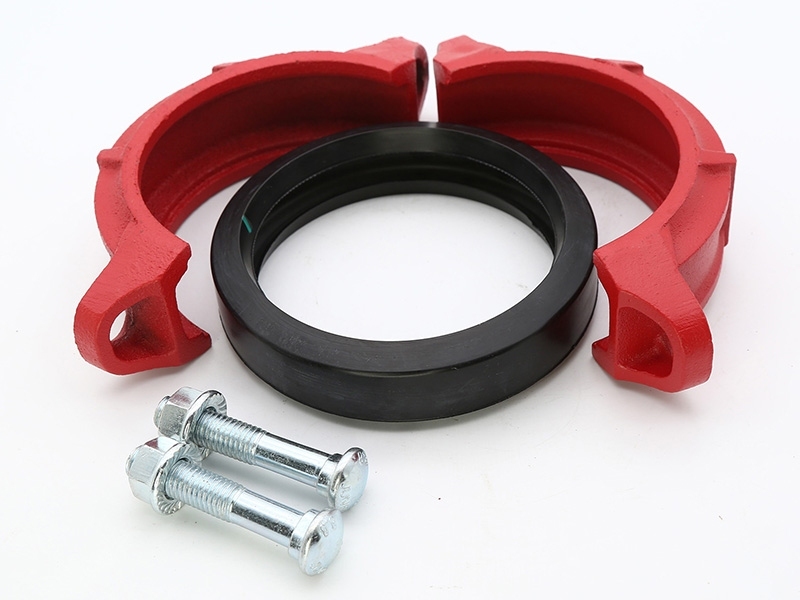
A grooved coupling for fire protection utilizes a mechanical housing engagement into pipe end grooves paired with a pressure-responsive elastomeric gasket.
- Rapid Assembly: A fire protection grooved coupling installs up to 70% faster than welded or flanged joints using basic hand tools.
- Rigid and Flexible Configurations: Available as rigid couplings for straight risers and flexible couplings for expansion joints and pump connections.
- Self-Sealing Gasket Technology: C-shaped EPDM gaskets utilize internal fluid pressure to reinforce the seal as system pressure increases.
Threaded Connections: Traditional Application in Small Diameters
Threaded fire sprinkler fittings cut male and female threads directly into the pipe wall, serving mainly smaller distribution branch lines.
- Pipe Wall Compromise: Threading reduces effective pipe wall thickness, diminishing overall structural pressure containment.
- High Leak Potential: In a grooved vs threaded pipe connection evaluation, threaded joints show higher susceptibility to leaks caused by dynamic vibration or overtightening.
- Labor Intensity: Thread cutting, deburring, thread sealing tape application, and manual wrenching increase field labor time significantly.
Flanged Piping: Heavy-Duty Applications for Valves and Equipment
Flanged fire protection piping relies on bolted metal rings sandwiching a flat gasket, primarily used at equipment interfaces.
- Heavy Equipment Connection: Provides sturdy flanged connections for fire pumps, check valves, and backflow preventers.
- Space and Weight Constraints: Comparing a grooved vs. flanged connection highlights that flanges require larger spatial clearance and add substantial dead weight.
- Torque Sensitivity: Flanged joints demand precise star-pattern bolt torquing; uneven bolt tension leads to gasket blowout under pressure spikes.
Application Scenarios: Choosing the Right Coupling for Fire Sprinkler Systems
Applying the right joining technology to specific building areas resolves critical field challenges and lowers total installation cost. Matching fire sprinkler coupling types to real-world environments ensures long-term operational readiness.
High-Rise Buildings and Commercial Complex Fire Sprinkler Systems
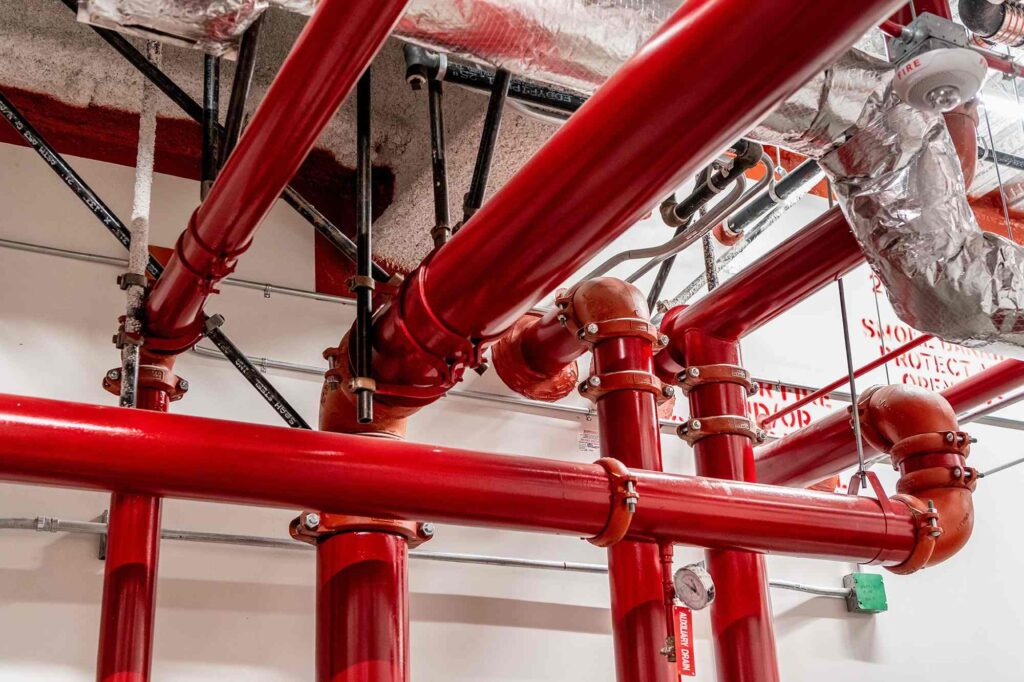
Tall structures demand reliable vertical risers and horizontal mains capable of enduring high static pressure and floor deflection.
- Riser Alignment & Support: Installing a ductile iron grooved coupling on main vertical supply risers simplifies vertical alignment and absorbs building settling stresses.
- Seismic Expansion Loops: Flexible grooved couplings installed at structural expansion joints absorb seismic sway, preventing pipe shear during ground movement.
Industrial Warehouses, Retrofit Projects, and Pump Rooms
Fast-paced industrial builds and active commercial retrofits require rapid, flame-free installation technology.
- Occupied Building Retrofitting: Renovation projects use fire sprinkler grooved fittings to add branch lines without generating smoke, open flames, or disruption to existing operations.
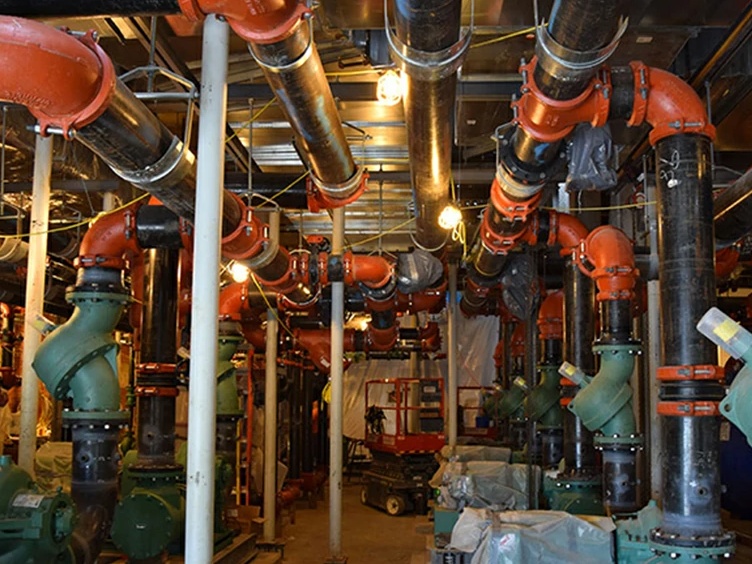
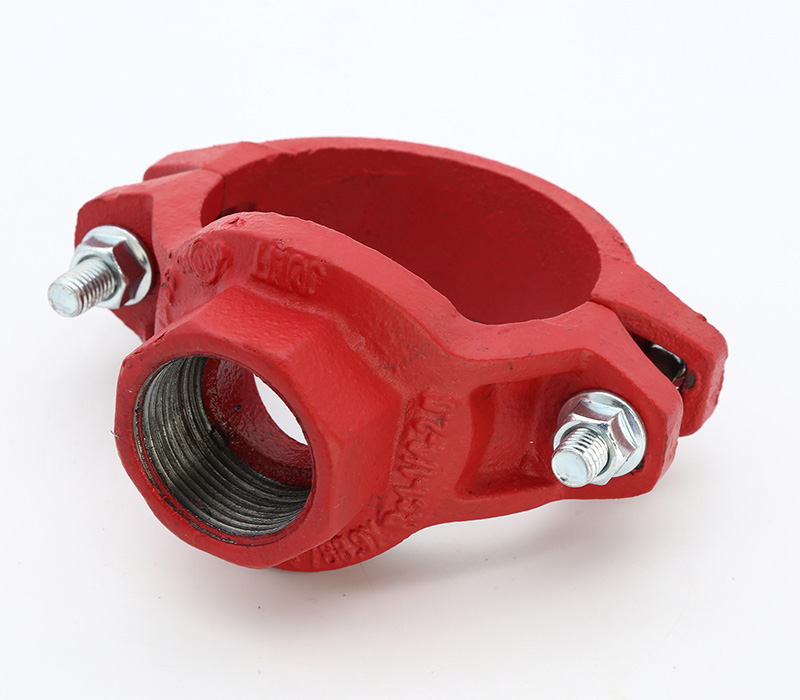
- Pump Room Isolation: Grooved flange adaptors and mechanical tees isolate high vibration around fire pumps, preventing mechanical fatigue across connected header pipes.
Why Engineering Professionals Trust JunTong Grooved Solutions
JunTong makes grooved pipe fittings that help crews finish installs faster while keeping pipe systems strong and steady. We focus on solid material quality and offer clear technical support, so projects move ahead without delays.
Superior Metallurgy and Anti-Corrosion Engineering
Each JunTong product goes through careful steps to handle tough sites and steady high pressure.
- High-Strength Castings: Made from QT450-10 ductile iron, these parts give strong tensile strength and good impact resistance when loads peak.
- Anti-Corrosion Baking Paint: A baking paint layer covers the surface and blocks rust in wet or harsh air conditions.
- Precision-Engineered Gaskets: High-grade EPDM synthetic rubber gaskets stop leaks across wide temperature swings.
One-Stop Technical Support and Global Compliance
JunTong bridges product manufacturing with complete engineering service to streamline contractor procurement and installation.
- Full Industry Certifications: ISO 9001 factory management, FM Approval, and UL Listings guarantee international acceptance.
- Tailored Selection Services: Free technical selection support helps engineers match specific pressure ratings and pipe dimensions, preventing jobsite errors.
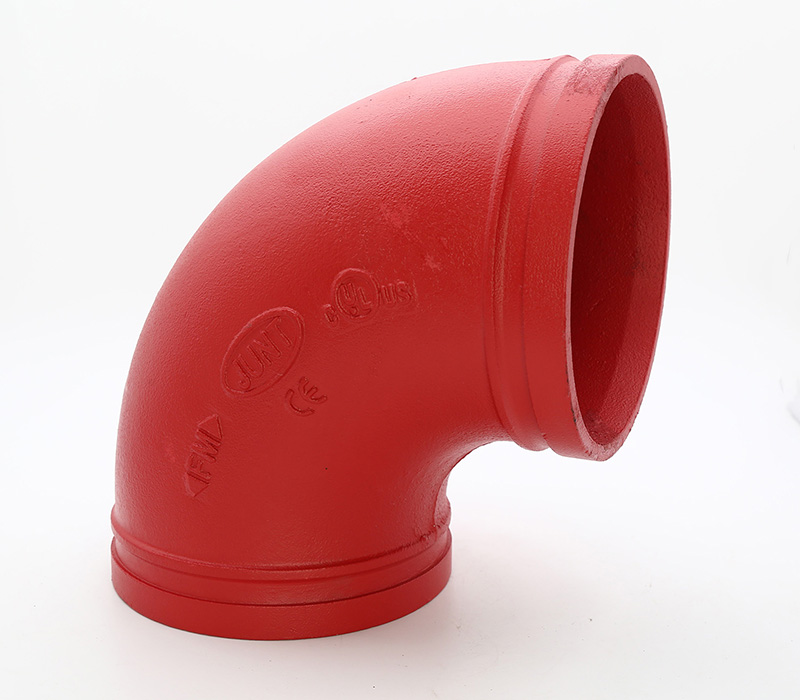
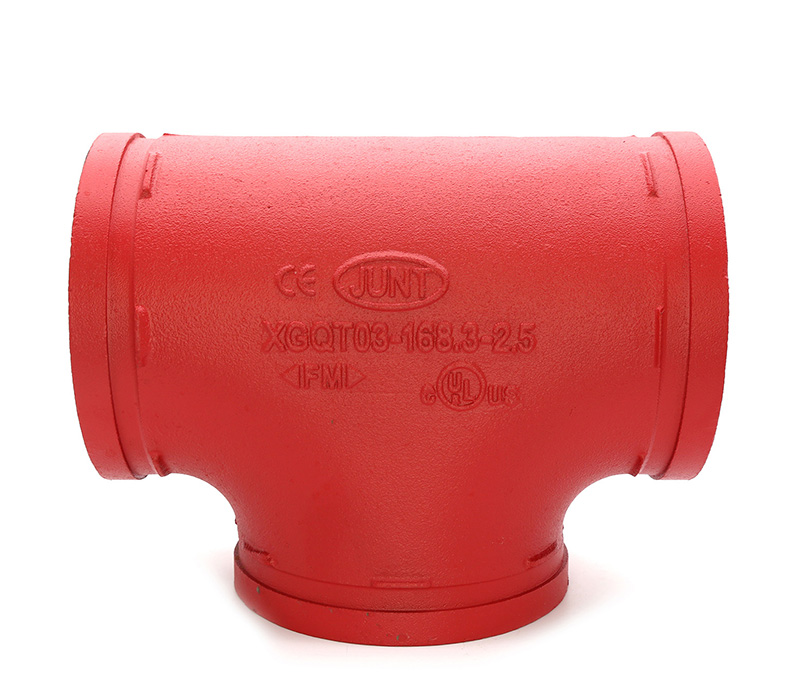
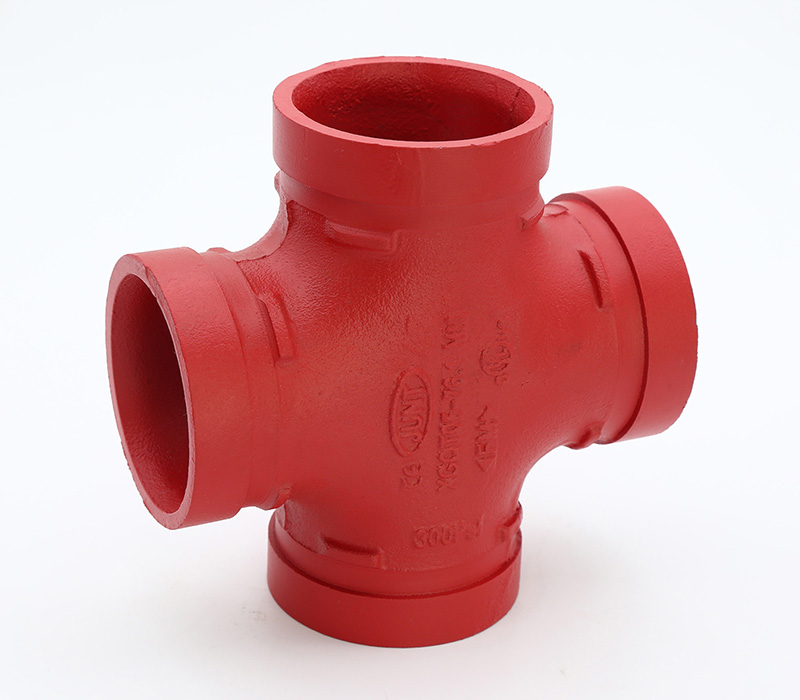
- Comprehensive Portfolio: A complete range of rigid/flexible couplings, elbows, equal tees, mechanical tees, reducers, and flange adaptors for end-to-end system builds.
Ready to upgrade your next fire protection piping project with certified, high-performance couplings? Contact JunTong today to request a free selection consultation, product catalog, or project quote!
FAQ
Q: What is the main advantage of choosing a grooved coupling over a threaded fitting in fire protection?
A: A grooved coupling for fire protection goes together up to 70% faster than threaded options. It keeps the full pipe wall thickness, so the line handles higher pressure. It also cuts vibration that threaded joints often pass along.
Q: What pressure ratings can a high-quality grooved coupling handle in sprinkler systems?
A: Certified ductile iron grooved coupling systems work from 300 PSI to 500 PSI. The exact rating depends on pipe schedule and the coupling style chosen for the job.
Q: When should engineers specify flexible grooved couplings instead of rigid grooved couplings?
A: Rigid couplings suit straight risers and long runs that need steady alignment. Flexible couplings go near pumps, seismic joints, and expansion loops because they take movement without stress.
Q: How does surface coating quality impact the lifespan of fire sprinkler fittings?
A: A good anti-corrosion baking paint stops rust on both sides of the fitting. This keeps the gasket seat tight and stops early joint failure in damp fire protection areas.
Recent Post