ABOUT US
We welcome new and old customers from all walks of life to contact us for future business relationships and mutual success!
GET A FREE QUOTE
-
Home

-
Blog
-
Industry News
- 7 Must-Have Grooved Pipe Fittings for Modern Installations
7 Must-Have Grooved Pipe Fittings for Modern Installations
-
 JunTong
- 1,October
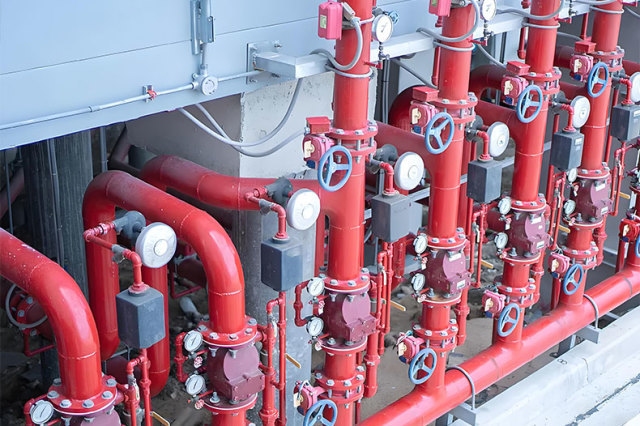
Modern mechanical piping systems need joining methods that balance speed, reliability, and lasting performance. Grooved pipe fittings and mechanical grooved joining systems have taken the place of flame welding and threading on many commercial and industrial projects.
Understanding Grooved Piping Systems in Modern Infrastructure
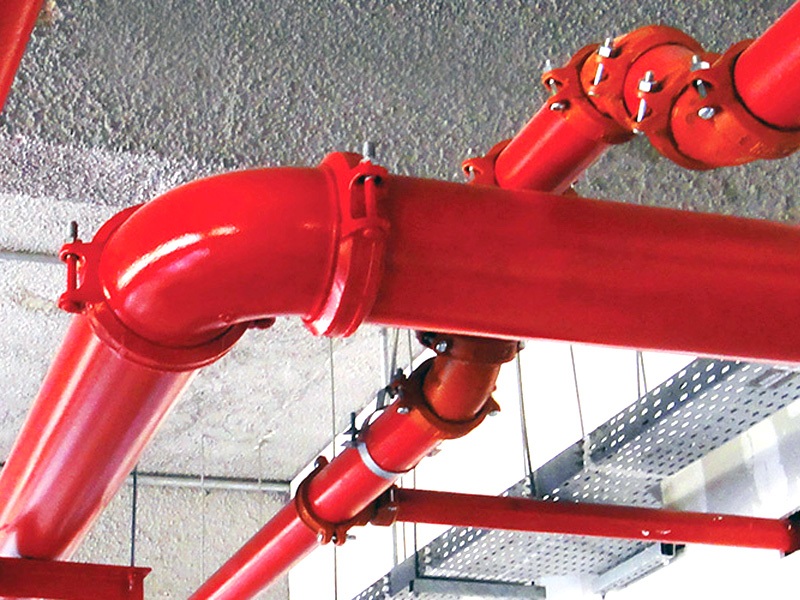
Mechanical grooved piping uses a cold-formed or cut groove on the pipe ends. A ductile iron housing and an elastomeric gasket enclose the groove. Selecting the right grooved fitting types makes installation simpler while adding system flexibility.
- Rapid Assembly: Joining pipes with a grooved pipe coupling needs only standard tools. This removes open flames, welding permits, and hot-work fire watches from the job site.
- System Flexibility: Grooved pipe fittings handle angular deflection, thermal expansion, contraction, and seismic movement. They avoid extra stress on equipment connections.
- Easy Maintenance: Quick disassembly lets technicians isolate, inspect, or change pipe segments without cutting or harming nearby infrastructure.
- Reliable Sealing: Synthetic C-shaped rubber gaskets create a double-sealing action. The seal tightens when internal system pressure rises.
As a dedicated manufacturer of high-performance ductile iron grooved fittings, JunTong produces precision-engineered components. These parts improve safety, speed up installation, and address fluid handling needs in commercial and industrial projects.
7 Essential Types of Grooved Pipe Fittings
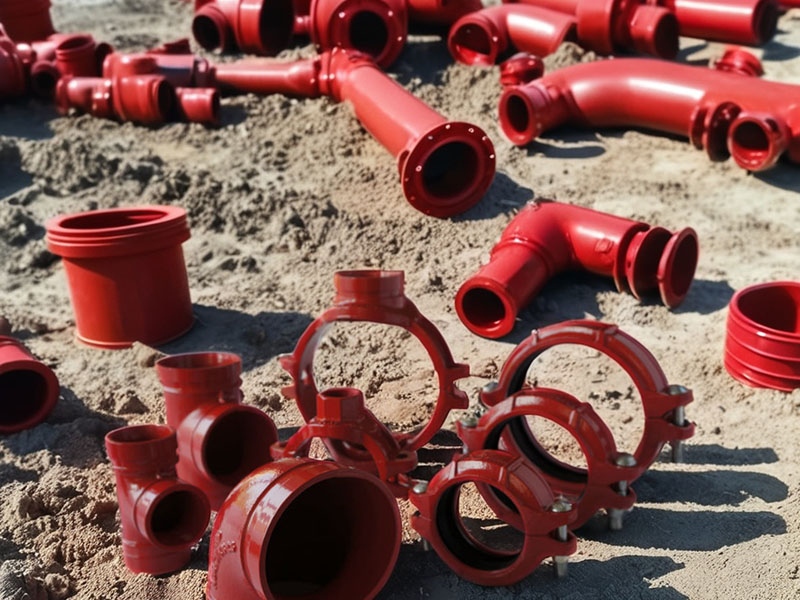
Selecting the correct types of grooved pipe fittings is essential for maintaining hydraulic flow, structural stability, and system pressure integrity. The following seven grooved fitting types cover many common commercial and industrial piping requirements.
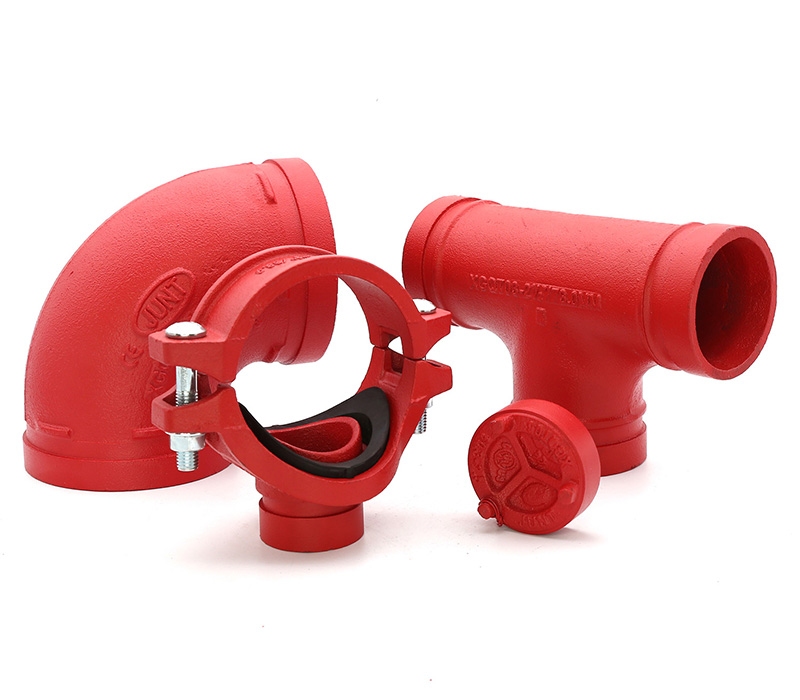
1. Grooved Pipe Couplings (Rigid & Flexible)
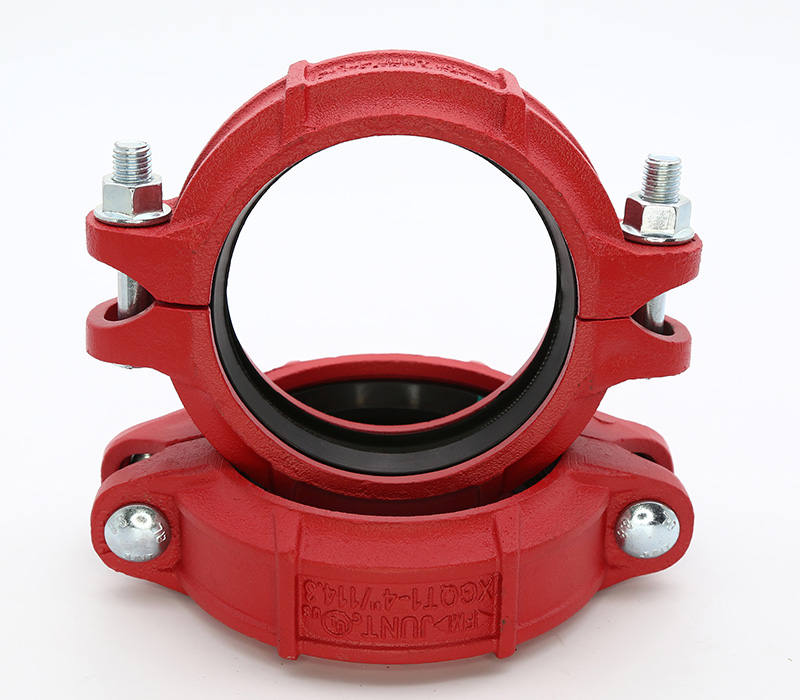
A grooved pipe coupling connects two pipe sections and supplies the mechanical performance required by the project.
- Rigid Grooved Coupling: A rigid grooved coupling features angled bolt pads that lock into the pipe groove. This creates a stiff joint without axial movement, angular deflection, or twisting. Such joints suit vertical risers, mechanical rooms, and long straight runs.
- Flexible Grooved Coupling: A flexible grooved coupling has a controlled gap in the housing key. It permits limited linear movement along with expansion, contraction, and angular deflection. These features handle thermal stress and structural settlement.
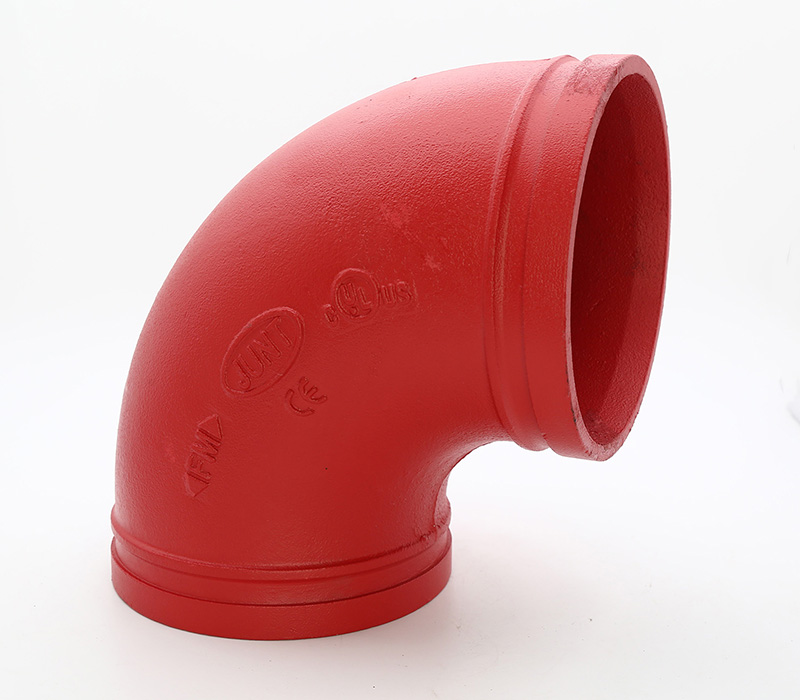
2. Grooved Pipe Elbows
Grooved pipe elbows have been developed for situations where piped systems need to change direction, reducing friction losses and turbulence.
- Directionality: Offered in 90° and 45° configurations for changing the direction of the line through tight ceiling and utility shaft spaces.
- High-Durability Construction: Formed from high-quality ductile cast iron conforming to the ASTM A536 specification; resists hydraulic pressures and fluid hammering without breaking.
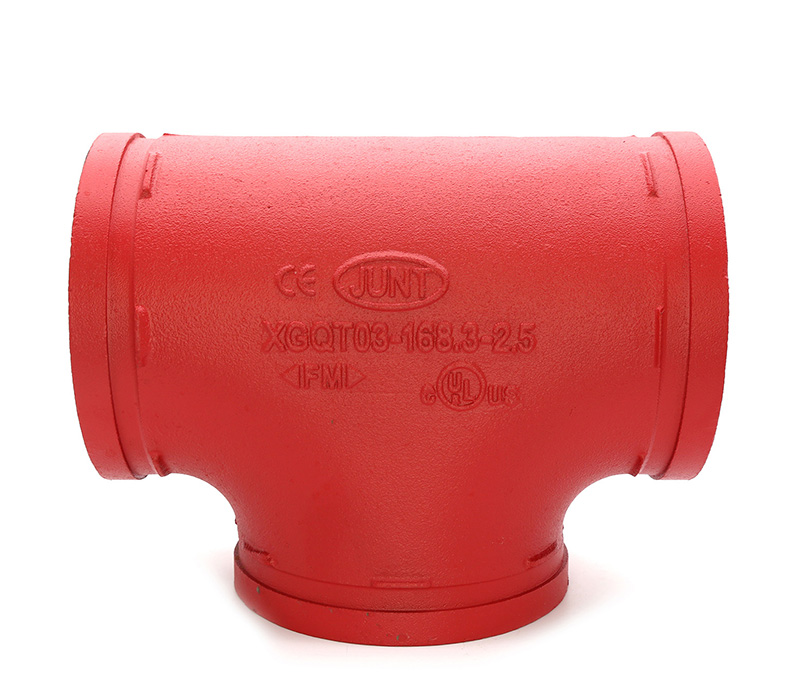
3. Grooved Pipe Tees
A grooved pipe tee forms a three-way branch connection. It splits main supply lines into sub-lines and keeps flow balanced.
- Equal Flow Branching: Standard equal grooved pipe tee fittings link three pipes of the same nominal diameter at 90-degree angles.
- Structural Durability: The heavy-duty housing stops distortion under high static pressure. This lowers the risk of line failure in commercial fire sprinkler systems.
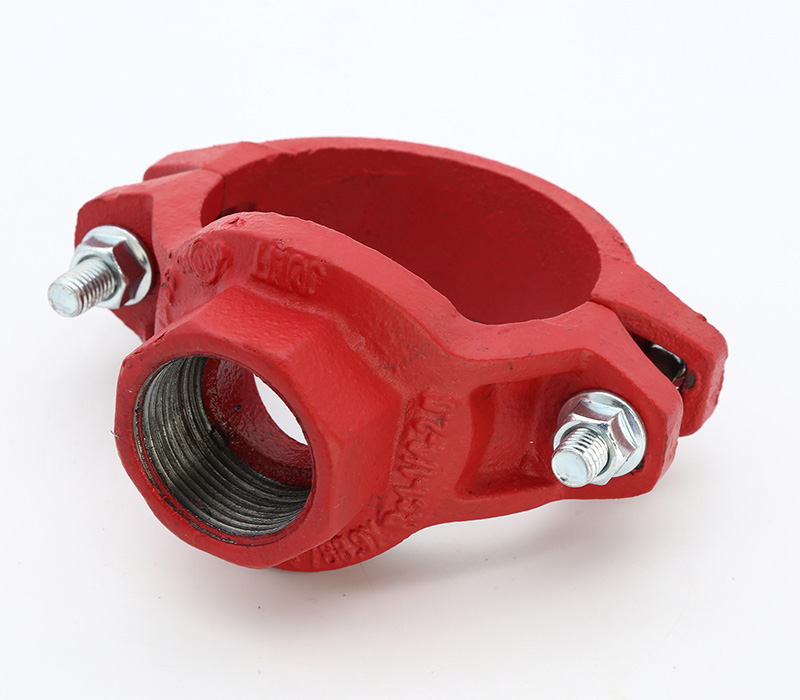
4. Grooved Mechanical Tees
Adding branch outlets to existing or new pipe runs without cutting or removing pipe sections requires a specialized grooved mechanical tee.
- Direct Header Outlets: A grooved mechanical tee fastens onto a drilled hole in the pipe run, sealed with a pressure-responsive gasket to create a branch connection.
- Fast Retrofitting: Eliminates the need to cut complete pipe sections, drastically reducing retrofitting labor in active HVAC and industrial water networks.
5. Grooved Pipe Reducers
A grooved pipe reducer is used when transitioning between different pipe diameters while managing fluid velocity and pressure differentials smoothly.
- Concentric Reducers: Maintain the centerline of the pipe, providing uniform flow acceleration in vertical risers and general fluid transfer lines.
- Eccentric Reducers: Feature an offset flat side to prevent air pockets from forming in horizontal liquid lines, specifically on pump suction inlets.
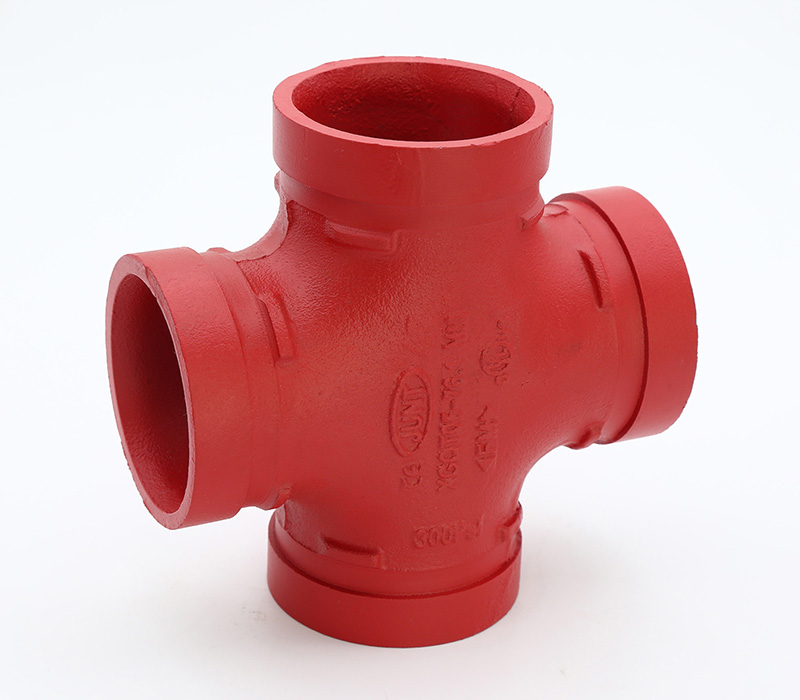
6. Grooved Cross Fittings
A grooved cross fitting provides four-way distribution for complex fluid headers and fire protection manifolds within limited spatial footprints.
- Four-Way Branching: Grooved cross fitting designs connect four pipe runs at right angles, serving as central distribution headers in commercial utility spaces.
- Space Optimization: Replaces multiple individual tees and elbows, reducing total joint count and installation time in crowded mechanical rooms.
7. Grooved Flange Adaptors
A grooved flange adaptor connects grooved piping networks to flanged equipment such as pumps, strainers, and control valves.
- Hybrid Connection: The grooved flange adaptor transitions directly from a grooved pipe profile to a standard ANSI or PN flange bolt pattern.
- Simplified Equipment Tie-In: Allows contractors to bolt directly to equipment flanges without welding specialized flange necks on-site.
Key Commercial and Industrial Applications
Choosing the right grooved fitting types for each setting helps keep systems reliable over time and cuts down on repair costs.
Industrial Grooved Pipe Fittings in HVAC Systems
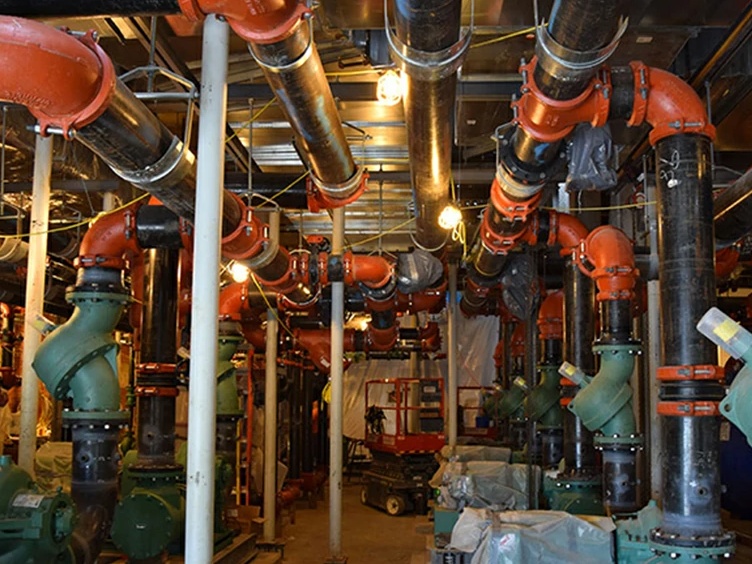
Heating and cooling networks in commercial buildings face ongoing temperature swings and vibrations from equipment. This makes grooved fittings for HVAC a solid choice for connections.
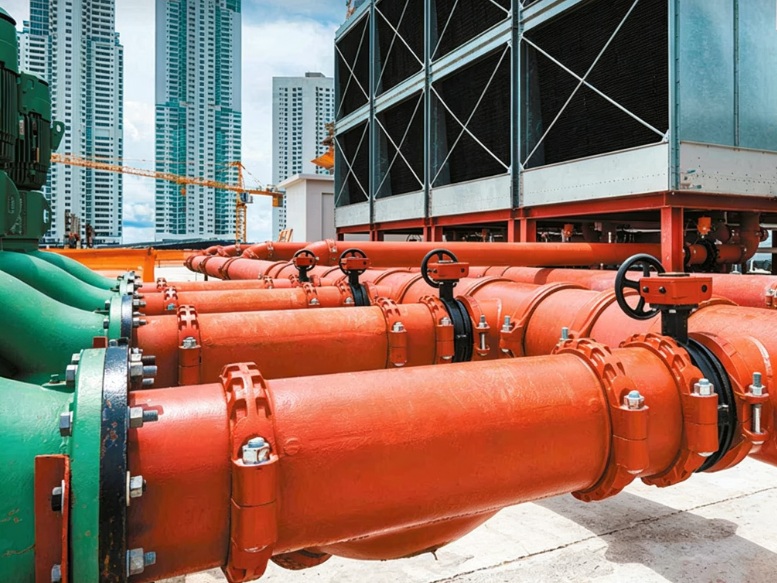
- Thermal Stress Relief: Flexible couplings placed near chillers, boilers, and cooling towers let grooved fittings for HVAC handle thermal expansion. This avoids the need for costly expansion loops.
- Vibration Isolation: The elastomer gasket reduces noise and vibration from pumps before it travels through the building structure.
These features make industrial grooved pipe fittings a good fit for chilled water, heating, and mechanical room piping.
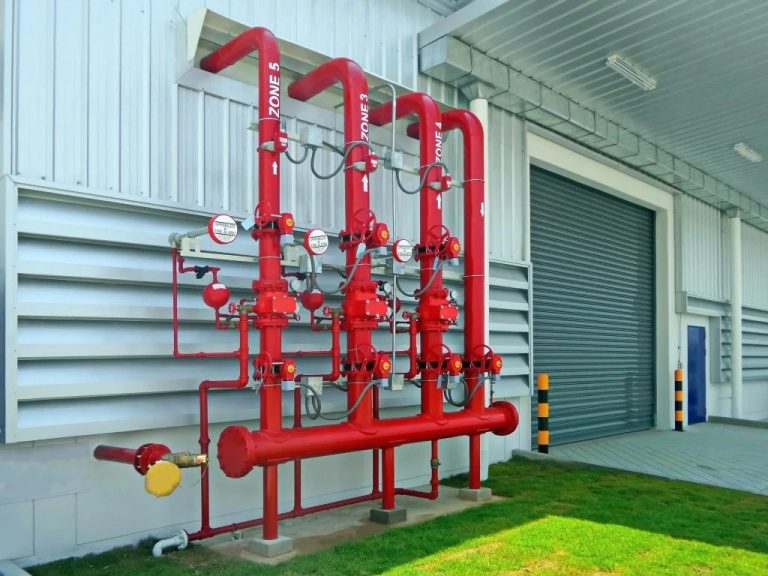
Fire Protection and Water Distribution Infrastructure
Tall buildings and warehouses need water systems that handle high pressure and work during emergencies.
- Seismic and Settlement Resilience: Ductile iron grooved fittings and grooved joints absorb building movement and ground shifts, which protects fire lines during earthquakes.
- Corrosion Protection: Industrial grooved pipe fittings finished with electro-deposited epoxy resist rust inside and corrosion outside in tough industrial conditions.
Why JunTong Is Your Trusted Grooved Fitting Partner
Working with a skilled manufacturer gives your project accurate grooved pipe fittings along with solid engineering help.
Premium Ductile Iron Quality and Technical Support
JunTong runs the full production process and supplies strong customer support.
- High-Grade Ductile Iron: All JunTong ductile iron grooved fittings are cast from high-quality ductile iron. This delivers greater tensile strength and impact resistance than standard gray iron.
- Precision Seal Engineering: High-durability EPDM and NBR synthetic rubber gaskets give leak-free results over wide temperature ranges.
- Comprehensive Project Services: Beyond supply, JunTong provides technical advice, installation guidance, and layout design. These services keep piping efficient and meet code rules.
Request a Quote Today
Improve your plant and building pipe jobs with solid grooved pipe fittings from JunTong. Reach to us now for a custom quote or technical advice on your next install.
FAQ
Q: What is the main structural difference between rigid and flexible grooved couplings?
A: A rigid grooved coupling has angled bolt pads that clamp tightly into the groove and block joint movement. A flexible grooved coupling allows controlled axial, thermal, and angular movement instead.
Q: Can grooved pipe fittings handle high-pressure commercial HVAC applications?
A: Yes, ductile iron grooved fittings work under pressures up to 300+ PSI (2.0–2.5 MPa). This makes them suitable as grooved fittings for HVAC in high-rise chilled water and heating lines.
Q: When should a mechanical tee be used instead of a standard equal tee?
A: A grooved mechanical tee works well when adding a branch outlet to an existing pipe without cutting the main line. A standard grooved pipe tee fits better during initial line assembly that needs full pipe cuts.
Q: Are grooved fittings compatible with both roll-grooved and cut-grooved pipes?
A: Yes, standard grooved pipe coupling designs lock into both roll grooves on standard wall pipe and cut grooves on heavier-wall pipe.
Recent Post